

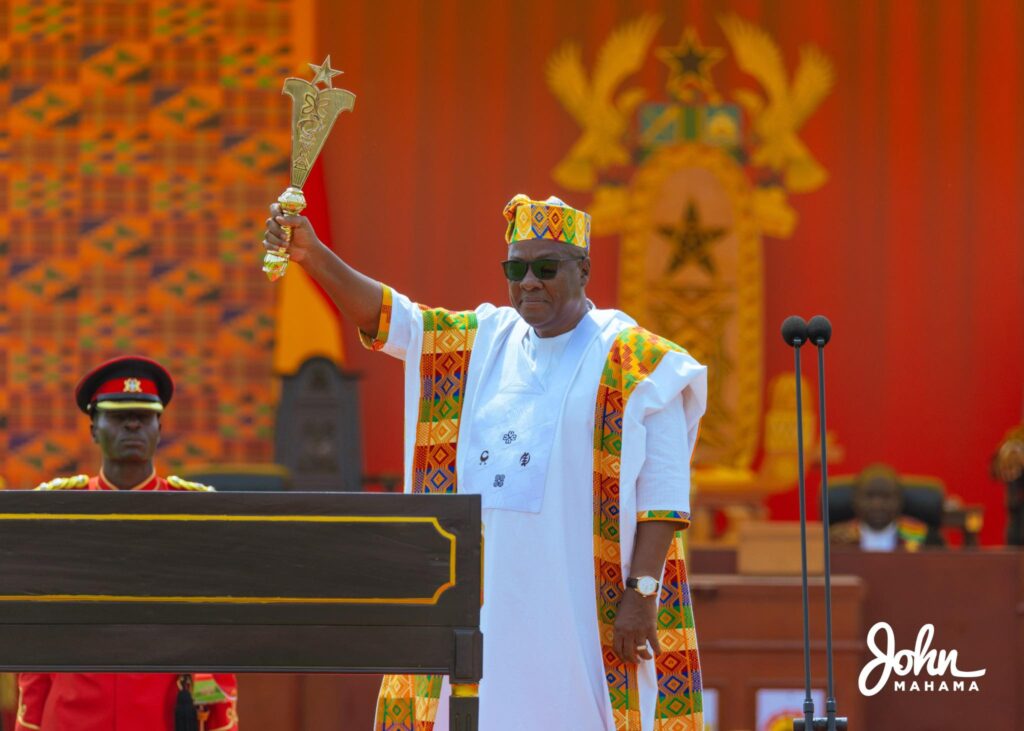
Accra, Ghana — March 19, 2026
By Raw Reporter Correspondent
Ghana’s President John Dramani Mahama is set to deliver a highly anticipated address before the United Nations General Assembly on Tuesday, March 24, 2026, in which he is expected to present a comprehensive framework calling for reparatory justice for the transatlantic slave trade and its enduring consequences on the African continent and its diaspora.
The speech, which diplomatic sources describe as one of the most significant addresses on the issue by a sitting African head of state in recent memory, is expected to outline a multi-pillar approach to reparations — encompassing financial restitution, institutional reform, debt cancellation, and developmental investment — directed at former colonial and slave-trading nations.
A Continental Mandate
President Mahama is understood to be speaking not only on behalf of Ghana but carrying a broader mandate from the African Union (AU), whose heads of state endorsed a unified position on reparatory justice at a special summit held in Addis Ababa earlier this year. That February summit culminated in the Addis Ababa Declaration on Reparatory Justice, a landmark document that called for structured engagement with Western governments and multilateral institutions on the question of historical redress.
“President Mahama was the natural choice to lead this charge on the global stage,” said a senior AU diplomat who spoke on condition of anonymity. “Ghana’s historical significance in the slave trade — as both a departure point for millions of enslaved Africans and a beacon for Pan-African return — gives him unparalleled moral authority.”
Ghana is home to approximately 30 former slave forts and castles along its coastline, including the UNESCO World Heritage Sites of Cape Coast Castle and Elmina Castle, through which hundreds of thousands of enslaved Africans were shipped across the Atlantic between the 15th and 19th centuries.
Key Pillars of the Address
According to a preliminary briefing document circulated to selected journalists by the Office of the President in Accra, the speech is expected to touch on several core themes:
1. Historical Accountability and Formal Apology
President Mahama is expected to call upon nations that participated in and profited from the transatlantic slave trade — including the United Kingdom, the Netherlands, Portugal, Spain, France, Denmark, and the United States — to issue formal, unequivocal apologies. The address is expected to distinguish between expressions of “regret,” which several nations have previously offered, and full apologies that acknowledge legal and moral culpability.
2. Financial and Economic Restitution
The President is anticipated to present a detailed economic argument quantifying the extraction of wealth from the African continent through the slave trade and subsequent colonial exploitation. Sources familiar with the draft address suggest that Mahama will reference academic studies estimating the economic impact of the slave trade at figures running into the tens of trillions of dollars in present-day value. He is expected to propose the establishment of a Global Reparations Fund, administered under the auspices of the United Nations, to channel resources toward African and diaspora development.
3. Debt Cancellation
A significant component of the address is expected to frame the external debt carried by many African nations as a perverse legacy of colonialism and the slave trade. Mahama is likely to argue that the cancellation of sovereign debt owed by African countries to former colonial powers and Western-dominated financial institutions should be regarded as a baseline act of reparatory justice rather than an act of charity.
4. Institutional and Structural Reform
The President is expected to call for reform of international institutions — including the United Nations Security Council, the International Monetary Fund, and the World Bank — arguing that their current structures perpetuate the power imbalances established during the era of the slave trade and colonialism.
5. Educational and Cultural Restoration
The speech is also expected to address the cultural and psychological dimensions of the slave trade’s legacy, calling for investment in educational programmes across the West that provide comprehensive and honest instruction on the history and consequences of the transatlantic slave trade.
Building on Ghana’s Legacy
The address represents a continuation of Ghana’s long-standing positioning at the forefront of Pan-African identity and diaspora engagement. Under the late President Jerry John Rawlings and subsequent administrations, Ghana cultivated deep ties with the African diaspora. The country’s landmark “Year of Return” initiative in 2019, marking 400 years since the first recorded enslaved Africans arrived in the English colony of Virginia, attracted tens of thousands of diaspora visitors and catalysed significant investment and cultural exchange.
The successor programme, “Beyond the Return,” continued to strengthen those bonds, and President Mahama’s administration has reportedly sought to deepen the initiative further, positioning Ghana as the spiritual and political home of the reparations movement.
Mahama himself has spoken about the issue on multiple occasions since returning to office in January 2025. In a national address marking Ghana’s 69th Independence Day on March 6, 2026, the President stated: “The wealth that built the great capitals of Europe and the Americas was extracted from the blood, sweat, and suffering of our ancestors. This is not merely a matter of history. It is an unresolved debt — moral, economic, and spiritual — that continues to shape the unequal world we inhabit today.”
International Reactions
The anticipated speech has already generated significant international attention and, predictably, a spectrum of responses.
Caribbean Community (CARICOM) nations, which have been among the most vocal advocates for reparatory justice through the work of the CARICOM Reparations Commission established in 2013, have expressed strong support. Barbados Prime Minister Mia Mottley, a leading global voice on issues of historical justice and climate equity, described the upcoming address as “a watershed moment for the Global South.”
“For too long, the conversation on reparations has been dismissed as impractical or relegated to the margins of international discourse,” Mottley said in a statement. “President Mahama’s address has the potential to move this question from the periphery to the centre of the global agenda, where it belongs.”
The African diaspora community has also mobilised in support. Organisations across the United States, the United Kingdom, Brazil, and the Caribbean have announced solidarity events timed to coincide with the address. The National African American Reparations Commission (NAARC) issued a statement calling the speech “a moment of convergence between the African continental and diaspora movements for justice.”
Western governments, however, have been notably more cautious. A spokesperson for the British Foreign, Commonwealth and Development Office offered a carefully worded statement: “The United Kingdom acknowledges the horror of the transatlantic slave trade and its lasting impact. We remain committed to working with international partners to address inequality and promote development, and we look forward to engaging with President Mahama’s remarks constructively.”
The French government declined to comment ahead of the address, while the United States State Department said only that it “respects Ghana’s right to raise issues of importance at the United Nations” and that it would “review the proposals in full once they are formally presented.”
A Divisive Global Debate
The question of reparations for slavery remains one of the most contentious issues in international affairs. Proponents argue that the transatlantic slave trade — which forcibly displaced an estimated 12 to 15 million Africans between the 16th and 19th centuries — constituted a crime against humanity whose consequences continue to manifest in racial inequality, economic disparity, and systemic disadvantage across the globe.
Opponents, primarily in the West, have raised objections on grounds of practicality, legal precedent, and the passage of time. Some have argued that modern nations and their citizens should not bear financial responsibility for actions that occurred centuries ago, while others have questioned the feasibility of calculating and distributing reparations.
However, the discourse has shifted markedly in recent years. The Netherlands issued a formal apology for its role in the slave trade in 2023. Several American cities and states, as well as a number of European universities and financial institutions, have established reparatory funds or programmes acknowledging their historical ties to slavery. The Church of England committed £100 million in 2023 to address its historical links to the slave trade.
The Durban Declaration of 2001, adopted at the World Conference against Racism, acknowledged the slave trade as a crime against humanity, though it stopped short of endorsing financial reparations — a point that President Mahama is expected to revisit in his address.
What Comes Next
Diplomatic sources indicate that the speech is intended not as a standalone rhetorical exercise but as the opening salvo in a sustained diplomatic campaign. Ghana, in coordination with the AU and CARICOM, is expected to table a formal resolution at the United Nations calling for the establishment of an international commission on reparatory justice, with a mandate to examine the historical record, assess the scale of economic extraction, and develop a framework for redress.
Whether the resolution will gain sufficient traction in the General Assembly — and, critically, whether it could survive the dynamics of the Security Council, where several former slave-trading nations hold veto power — remains an open question.
“No one expects this to be resolved in a single speech or a single resolution,” said Professor Hilary Beckles, Chairman of the CARICOM Reparations Commission and Vice-Chancellor of the University of the West Indies. “But what President Mahama is doing is ensuring that the international community can no longer look away. The moral case is settled. Now we must build the political and legal architecture to deliver justice.”
The address is scheduled for 10:00 AM Eastern Time on Tuesday, March 24, and will be broadcast live by the United Nations. The Ghanaian government has indicated that President Mahama will hold a press conference at the UN headquarters immediately following the speech.