

March 22, 2026
Introduction: A Distant War With Proximate Consequences
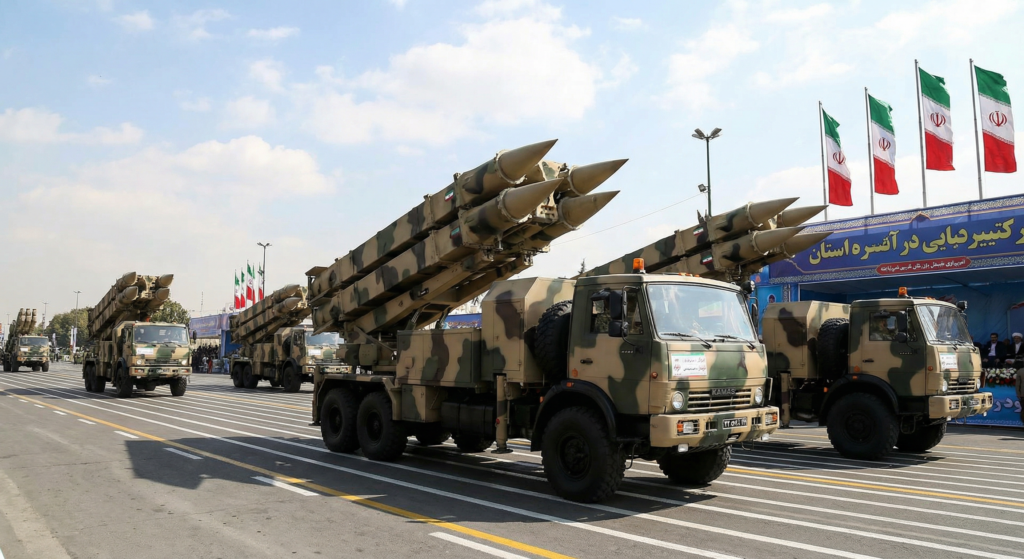
The 2026 Iran war began on 28 February 2026, when the United States and Israel launched surprise airstrikes on multiple sites and cities across Iran, killing Supreme Leader Ali Khamenei and numerous other Iranian officials. Iran responded with missile and drone strikes against Israel, US bases, and US-allied countries in the region. Now entering its fourth week, the conflict has rapidly expanded beyond the Middle East battlefield into a global economic crisis, and for African nations — particularly import-dependent economies like Ghana — the fallout is profound. African countries did not cause the war between the United States, Israel, and Iran. Yet millions of Africans may experience its economic and humanitarian fallout. This article examines Ghana’s diplomatic posture, the war’s cascading effects on African economies, and the specific vulnerabilities confronting the Ghanaian economy at a critical juncture in its recovery.
Ghana’s Diplomatic Response: A Call for Restraint and Dialogue
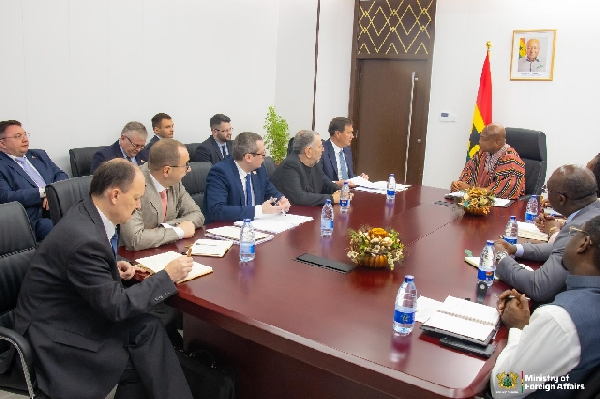
Ghana has adopted a consistent posture of diplomatic caution since hostilities first flared between Israel and Iran. Ghana’s Foreign Ministry urged both parties to display maximum patience, prioritize communication, and embrace diplomatic channels to de-escalate the situation. This response, dating from the Twelve-Day War of June 2025, has broadly continued into the current and far more devastating 2026 conflict.
Ghana’s approach mirrors the wider African response. African leaders have responded with calls for restraint and dialogue, emphasizing respect for international law. Diplomatically, African states are caught in a balancing act: some sympathies with Iran’s claims of self-defense, while others denounce violations of international law. This division reflects Africa’s difficulty in maintaining a unified foreign policy stance.
The conflict has also directly imperiled Ghanaian citizens. Three Ghanaian peacekeepers enrolled in UNIFIL were hit by a missile and wounded in Southern Lebanon, underscoring the very real human costs for Ghana even thousands of miles from the primary theatre of war. In response, Ghana cautioned nationals against non-essential travel to and from the Middle East as tensions escalated.
The Global Economic Shockwave
The 2026 Iran war has unleashed the most severe energy supply disruption in modern history. The oil production of Kuwait, Iraq, Saudi Arabia, and the United Arab Emirates collectively dropped by a reported 6.7 million barrels per day by 10 March, and by at least 10 million barrels per day as of 12 March — the largest supply disruption in the history of the global oil market.
The consequences for energy prices have been staggering. Brent crude, the industry benchmark, was priced at $106 per barrel as of mid-March, up more than 40 percent from $72 per barrel on February 27. By late March, Brent crude rose to more than $110 a barrel, and Goldman Sachs has warned that energy prices will stay elevated and that a barrel of oil may cost more than $100 all the way through 2027.
The 2026 Iran War disrupted global travel and trade, halted flights in and out of the Middle East, and led to shipping reroutes to avoid the Strait of Hormuz and the Red Sea. The closure of the Strait of Hormuz — through which approximately 20 percent of global oil and gas transits — has compounded disruption to fertilizer supply chains, shipping logistics, and consumer prices worldwide.
Repercussions on African Economies
Energy and Inflation
Global oil prices have surged as a result of strikes and retaliations, with Brent crude climbing above $82 per barrel as early as March 4, 2026. For Africa, this translates into fuel hikes, currency volatility, and supply chain disruptions. When the price of fuel rises, the price of food follows. Fertilizers, agricultural transport, and processing all become more expensive. The closure, by Iran, of the vital shipping lane that is the Strait of Hormuz has already impacted the importation of fertilizers in Africa. Fertilizer prices have gone through the roof since the war broke out, and experts warn that they are likely to increase food costs across sub-Saharan Africa.
Trade and Shipping Disruptions
Shipping companies are already considering longer and more expensive routes around southern Africa. While this may reduce immediate security risks for ships, it raises transportation costs worldwide, again feeding into inflation and economic strain for import-dependent countries. African airlines, heavily reliant on transit points in the Middle East, have had to suspend or reroute connections to the region — adding time and fuel costs, and stranding citizens.
Growth Projections and Fiscal Pressure
Some estimates suggest that if oil prices average $85 per barrel throughout 2026, inflation might rise by 60 basis points and growth could take a hit of up to 0.4 percentage points. The likely monetary policy response in most African economies — high interest rates — will cut out domestic credit that’s available to households and private firms. Growth will slow down, and with that governments’ ability to expand fiscal space. For some, a rising import bill will create balance of payment problems, just when governments were beginning to find their way out of the most recent fiscal squeeze. Cash from the Gulf, which has recently become a major source of both public and private liquidity flows into the Continent, will dry up as GCC countries face their own economic pressures.
Security Dimensions
The president of Djibouti denounced that both Israel and the United Arab Emirates are driving strategic realignments across Northeast Africa that risk intensifying current conflicts — including the Somali Civil War, Sudanese Civil War, Insurgency in Chad, and Libyan crisis — and a possible merging of them with the Iran–Israel proxy conflict. Beyond economics, the war threatens to deepen insecurity in the already volatile Horn of Africa, a region that sits strategically along the Red Sea and the Gulf of Aden, which routes are central to global trade and military logistics.
Ghana: Resilient But Exposed
A Stronger Starting Position
Ghana enters this crisis from a position of relative macroeconomic strength compared to previous external shocks. Ghana entered 2026 in the best macroeconomic shape it had seen in years. Inflation had fallen to 3.8 percent in January — the lowest level since the country’s consumer price index was rebased in 2021. The cedi had appreciated by more than 28 percent against the US dollar over the course of 2025. Gross international reserves had climbed to $13.8 billion, equivalent to 5.7 months of import cover.
Ghana closed 2025 with a budget deficit of just 1.0 percent of GDP — well below its 2.8 percent target — and a primary surplus of 2.6 percent of GDP. The Bank of Ghana cut its benchmark interest rate by a cumulative 12.5 percentage points between July 2025 and January 2026, reflecting confidence that inflation had been tamed. The debt-to-GDP ratio fell from 88 percent at the height of the crisis to approximately 53 percent by mid-2025.
Presidential Confidence — With Caveats
President John Dramani Mahama says he is confident in the nation’s economic rebound, describing the present economy as resilient enough to withstand external shocks. He emphasized that the economy remained stable and well-positioned to absorb the impact of international tensions, like the Israel-United States war against Iran. President Mahama noted that macroeconomic stability had improved significantly, citing a sharp decline in inflation from 23.4 per cent to 3.3 per cent. However, the President also acknowledged the gravity of the situation: “Without a resilient economy, any external shock will have severe consequences, and it’s therefore important that we sustain the gains made over the past year.”
Earlier, President Mahama raised serious concerns regarding the escalating US-Israel-Iran conflict, warning that it could have severe economic consequences for Africa due to rising oil prices.
Fuel Prices and Inflationary Risks
Ghana could face rising fuel prices and inflationary pressure as tensions in the Middle East escalate. Member of Parliament David T. D. Vondee stated that the global conflict directly affects global crude oil supply, with significant implications for fuel prices. He emphasized that the situation cannot be compared to the Russia-Ukraine war, noting that the Middle East crisis directly affects global crude oil supply. The Governor of the Bank of Ghana warned that rising geopolitical tensions could undermine the country’s recent gains in controlling inflation. However, there is a silver lining: fuel pricing in Ghana is influenced not only by international crude oil prices but also by the exchange rate and domestic taxes. As a result, a stronger cedi could limit the extent of price hikes at the pump. Concerns remain that inflation, currently around 3 percent, could rise due to external shocks. However, there is confidence that sound economic management and fiscal discipline would prevent a return to previously high inflation levels.
Remittances at Risk
A critical and often overlooked dimension of the crisis is its impact on Ghana’s remittance corridor. The outbreak of full-scale war across the Middle East has placed thousands of Ghanaian workers in the Gulf Cooperation Council region in immediate danger and raised urgent questions about the stability of a remittance corridor that pumped billions of dollars into Ghana’s economy. Ghana received remittances valued at approximately $3.09 billion in 2025, with a significant portion originating from Ghanaian nationals working across the UAE, Qatar, Bahrain, Kuwait, and Saudi Arabia — all of which were either directly struck or placed under active missile threat.
Ghana’s remittance sector entered 2026 on a growth trajectory, projected to grow at a compound annual growth rate of 1.78 percent through to 2030. That trajectory now faces its most serious external threat in years.
The Political Dimension
The war has also exposed a domestic political fault line. Many people have described President Mahama’s posture as “double standards,” noting that if previous global crises were said to have nothing to do with Ghana’s economic struggles, then the current war should not be used as an excuse either. Many workers are reminding the government that they would not accept the government using the Israel-Iran clashes to abdicate its social contract with the people who gave it power.
For the sake of gaining power, politicians — mostly when in opposition — often delude people that what happens on the global scene has nothing to do with the economic situation at home. However, it is a fact that as an import-driven economy, the slightest shocks on the global economy often trickle down to Ghana’s economy.
What Must Be Done
For Africa
The first priority must be diplomacy, as has been suggested by the European Union and the African Union. Preventing further escalation in the Middle East is essential not only for regional stability but also for global economic security. At the same time, African governments must strengthen regional cooperation to cushion the economic shock. Africa must confront the reality that global conflicts will continue to shape its destiny, whether it participates directly or not. The challenge lies in building resilience, asserting diplomatic agency, and demanding accountability in a world where the rules of war and peace are being rewritten.
For Ghana
Ghana must leverage its improved macroeconomic fundamentals as a buffer while pursuing several strategic priorities:
- Sustain fiscal discipline to preserve the hard-won gains of 2025 and protect the path toward the IMF programme exit scheduled for August 2026.
- Manage energy costs strategically, leveraging the relatively strong cedi to partially absorb global price shocks while shielding vulnerable populations.
- Diversify remittance and trade corridors, reducing over-reliance on any single region and strengthening intra-African trade linkages.
- Accelerate investments in renewable energy and domestic refining capacity to reduce structural vulnerability to global oil price shocks.
- Engage in multilateral diplomacy — through the African Union, ECOWAS, and the United Nations — to advocate for an immediate ceasefire and negotiated settlement.
Conclusion
The 2026 Iran war is a stark reminder that in an interconnected global economy, no nation is insulated from the consequences of distant conflict. The Israel–USA–Iran war is not a distant conflict devoid of consequences for Africa. It reverberates across the continent economically, politically, and socially. For ordinary Africans, it means higher fuel prices, inflation, and uncertainty.
Ghana’s response — a blend of diplomatic restraint, economic confidence, and vigilant preparedness — reflects both the maturity of its foreign policy and the vulnerability of its economic position. While President Mahama’s optimism regarding Ghana’s resilience is grounded in real macroeconomic improvements, the sheer scale and duration of this global energy shock will test those gains severely.
If great powers wage wars that destabilize global markets and trade routes, they must also recognize their responsibility for the broader human consequences. For Ghana and Africa at large, the imperative is clear: build resilience, demand accountability, and never allow the continent’s destiny to be written solely by forces beyond its borders.
This article draws on reporting and analysis from multiple sources, including Ghana Business News, the Ghana News Agency, Business & Financial Times (Ghana), Al Jazeera, CNN, Africanews, the World Economic Forum, Chatham House, and the Global Campus of Human Rights.